Latest Articles

Covert Abuse & Gaslighting
Why You Always Feel Like the Problem in Relationships
If you always feel like the problem in relationships, it's not a personality flaw — it's shame installed long before this relationship started. Here's the real pattern, including the family-systems origin, the covert-abuse connection, and one grounding tool.
Read More →

Covert Abuse & Gaslighting
Why You Feel Guilty for Having Needs
A trauma-informed breakdown of the difference between need-guilt and need-shame, how covert abuse and childhood emotional neglect teach you that your needs are a problem, and how to unlearn it.
Read More →

Covert Abuse & Gaslighting
Why You Always Feel Like Everything is All Your Fault (& Why Shame Moved In Right Behind It)
A trauma‑informed breakdown of why self‑blame and shame take over after covert abuse and why they are not the same wound. This piece separates “I did something wrong” from “I am something wrong,” exposes the tactics (DARVO, gaslighting, the silent treatment) that install both, and teaches you how to recognize the pattern before it hijacks your sense of self. If you've ever ended an argument convinced you were the problem, not just this time, but always, this article gives you the clarity, validation, and grounding you've been missing.
Read More →

Emotional Neglect
When Being the 'Calm One' Means You're Silently Carrying All of the Emotional Labor
You learned early that your job was to keep the room from exploding. Nobody told you what to do when you were the one burning. Read this so you can change that.
Read More →

Self-Trust & People-Pleasing
You're Not "Too Nice" – You're Fawning
Fawning isn't kindness. It's a trauma response. Here's how to recognize it, stop abandoning yourself, and rebuild boundaries that protect your peace.
Read More →
Never Miss a New Post or Free Tool
Get new trauma informed insights, boundary tools, and clarity building posts delivered straight to you — so you never lose momentum in your healing.
Subscribe
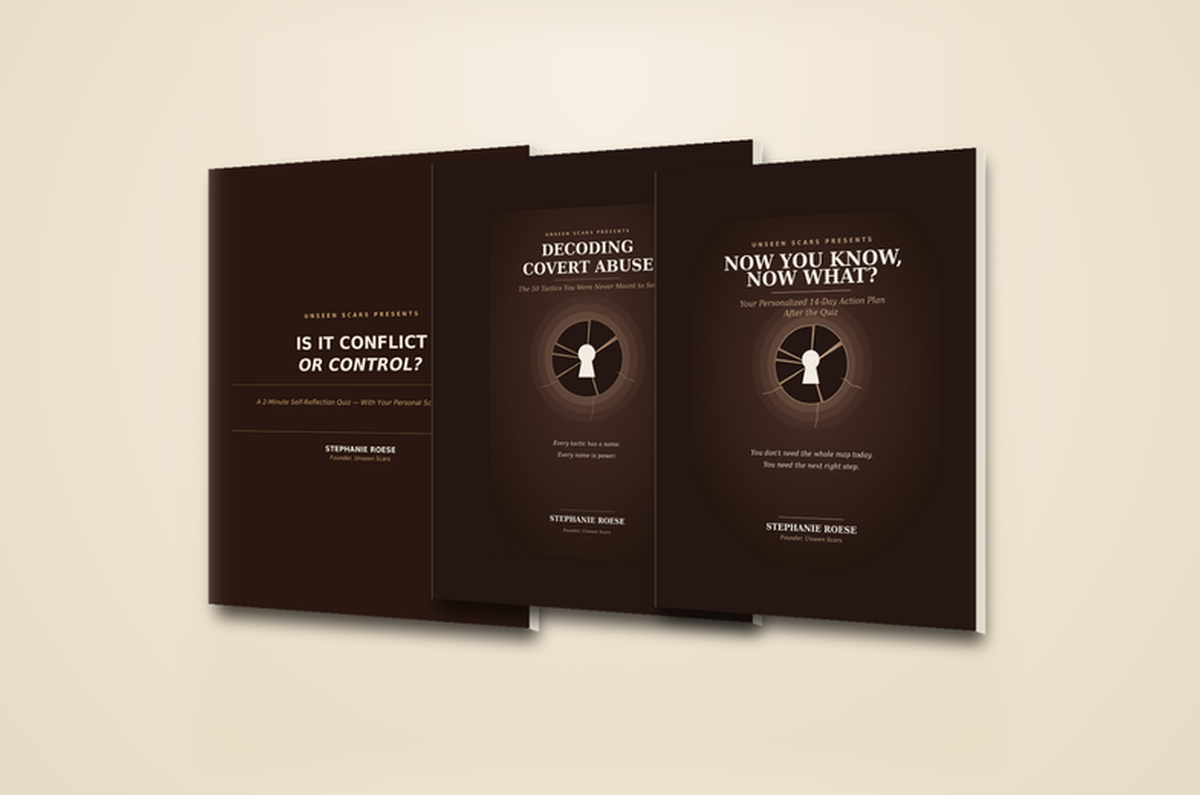
Is It Conflict — or Is It Control?
Some relationship friction is normal. Some of it is control wearing a disguise, and it can be hard to tell the difference from the inside. Take this free, 2-minute quiz to get clarity on what you're actually experiencing, plus a personalized breakdown of your results.
Take the Free Quiz →

About Stephanie
If you're here, you've likely spent years being told you're "too sensitive," "overreacting," or "imagining things." I know that world intimately. I wrote the Unseen Scars Workbook to give survivors the language, clarity, and tools I wish I had when I was trying to untangle emotional neglect and covert abuse.
I've spent decades decoding toxic patterns and healing from emotional neglect. I've turned the experiences I lived through and learned from into clear language, practical tools and straight-talking guidance. My work is trauma informed and deeply validating. I don't sugarcoat patterns or blame you for coping the only way you knew how. I help you understand what happened, stop doubting yourself, and rebuild the self-trust that was taken from you.
The key takeaway is, you're not "too much." You're someone who finally deserves clarity, language, and support that actually makes sense.
My Personal Essays
Beyond this blog, I've written more openly about where this work actually comes from — a childhood where feelings were treated as an inconvenience, and a sibling relationship that taught me what it feels like to be made invisible. If you want to understand the roots of everything I write about here, these personal essays go deeper than anything on this site.
Read My Personal Essays →
Talk It Through with Someone Who Gets It
What this call is: A 30-minute, no-pressure Zoom call where you can share a bit of your story, ask questions, and get clear language for what you've been experiencing – emotional neglect, various forms of covert abuse, or all of the above.
I will ask you a few questions too, so I can better understand what tools, resources or support would actually help you right now (not just in theory).
What this call is not: It's not therapy, crisis support or a sales ambush. It's a focused conversation to help you feel less alone, more validated and more equipped to decide what you want to do next.